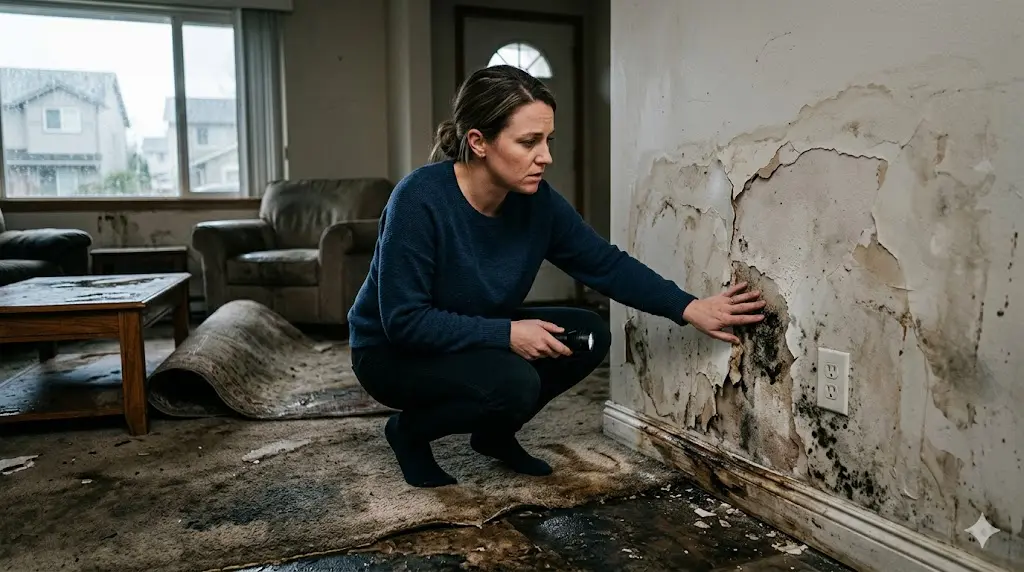
After a pipe bursts, basement floods, or roof leaks during a storm, the question every Arizona homeowner asks first is the same: can we stay in the house tonight? The honest answer depends on three factors most people don’t think about – water category, electrical safety, and structural integrity. This guide gives you the decision framework so you know exactly when staying is fine and when evacuating is mandatory.
Key Takeaways
- Category 1 (clean water) damage in localized areas: usually safe to stay with caution.
- Category 2 or 3 (gray or black water): evacuate immediately – biological contamination is dangerous.
- Any sign of compromised electrical or structural integrity: evacuate regardless of water category.
The 3 Decision Factors
Factor 1: Water Category
Per the IICRC S500 standard, water damage falls into three categories that determine safety:
- Category 1 (Clean): From supply lines, broken faucets, or melting ice. No biological contamination. Safe to stay if other factors clear.
- Category 2 (Gray): From dishwashers, washing machines, sump pump failure, or aquariums. Contains some contamination. Stay only with affected rooms sealed off.
- Category 3 (Black): Sewer backups, toilet overflow with feces, storm flooding from outside, river or floodwater. Highly toxic biological contamination. Evacuate. Period.
Factor 2: Electrical Safety
Water and electricity are deadly together. Evacuate immediately if:
- Water has reached any electrical outlet, switch, or fixture.
- You see sparks, smell burning insulation, or hear arcing sounds.
- Lights flicker or dim when affected room is entered.
- Water has reached the electrical panel, water heater, or HVAC equipment.
If unsure, shut off main breaker before doing anything else. Call an electrician for inspection before re-energizing affected circuits.
Factor 3: Structural Integrity
Water saturates structural members and weakens them. Evacuate if you see:
- Sagging or bowing ceiling – water above is heavier than the ceiling can hold.
- Floors that feel soft, springy, or slope unevenly.
- Cracks in walls or ceiling that have widened since the water event.
- Doors or windows that no longer close properly (frame shifted).
- Drywall that crumbles to the touch.
Health Risks of Staying
Even Category 1 water damage starts breeding mold within 24-48 hours. Per the CDC, mold spore exposure causes respiratory issues, allergic reactions, asthma exacerbation, and headaches. Children, elderly, and immunocompromised individuals show symptoms first.
Category 2 and 3 water carries bacteria (E. coli, salmonella), viruses (norovirus, hepatitis), and parasites. Direct contact or breathing aerosolized contaminants causes serious illness. Cross-contamination through shoes, pets, or HVAC ducts spreads risk to areas the water never reached.
When You Can Stay (With Caution)
Clean water damage in a localized area (single room or contained area), with electrical and structural confirmed safe, is usually OK to stay with these precautions:
- Seal off the affected room with plastic sheeting and door barriers.
- Run dehumidifiers and fans 24/7 in the affected area.
- Sleep in unaffected rooms; close doors between.
- Avoid HVAC operation if ducts pass through affected area (uses contaminated air).
- Have a 24/7 restoration company onsite within 4-6 hours.
When You Must Evacuate
- Any Category 3 water damage (sewer, floodwater).
- Standing water deeper than 1 inch over significant area.
- Electrical concerns: sparking, dim lights, water at outlets.
- Structural concerns: sagging ceiling, soft floor, widening cracks.
- Active leaks you cannot stop or contain.
- Anyone in household has compromised immune system or respiratory condition.
Per the Insurance Information Institute, standard homeowners insurance covers loss of use – your hotel and meals during evacuation are covered. Save receipts.
Frequently Asked Questions
How long until I can return home after water damage?
Cat 1 contained: usually within 1-2 days after drying begins. Cat 2: typically 3-7 days. Cat 3: weeks to months depending on remediation scope. Always wait for restoration company to clear the home first.
Can I sleep in my house if only the basement flooded?
Yes if water is contained, electrical is off in affected areas, and the basement is sealed off. Avoid HVAC use if ducts pass through the basement (spores will spread). Have restoration onsite within 24 hours.
Will my insurance pay for a hotel?
Yes – under “loss of use” or “additional living expenses” coverage. Standard policies include this. Document the cause and save all receipts.
Should I move my belongings out?
Move dry, undamaged belongings to unaffected areas if possible. Do not move wet items without restoration guidance – improper handling spreads contamination.
When to Call Western Restoration AZ
Western Restoration AZ provides 24/7 emergency water damage response across Phoenix, Tempe, Scottsdale, and the broader Arizona metro. Our IICRC-certified team determines water category, assesses safety, and begins immediate mitigation.
Free on-site safety assessment includes water category determination, electrical inspection, and structural check. Call our emergency line – we will tell you whether your home is safe to stay in tonight, and what to do next.